
Every home extension in NSW needs approval before construction starts. The part that trips people up is figuring out which pathway applies, and how long it actually takes.
Key Takeaways
- Two main approval pathways apply to extensions: Complying Development Certificate (CDC) and Development Application (DA).
- A CDC is assessed by a private certifier and is generally faster than a DA, which goes through council.
- Whether your project qualifies for CDC depends on setbacks, height, and site-specific overlays like flood or bushfire zones.
- Second storey additions and larger extensions are more likely to need a full DA.
What’s the Difference Between a CDC and a DA?
A Complying Development Certificate (CDC) is assessed against a fixed set of rules by a private certifier, while a Development Application (DA) goes through council and involves a merit-based assessment that can include neighbour notification (NSW planning framework, general guidance, 2026). If a project meets every CDC requirement exactly, it can usually move faster. If it doesn’t meet even one, it drops into the DA pathway by default.
The CDC pathway isn’t a lighter version of council approval. It’s stricter in one specific way: there’s no room for negotiation. A DA might get approved with conditions attached, but a CDC either meets every rule or it doesn’t qualify at all.
Which Extensions Usually Qualify for a CDC?
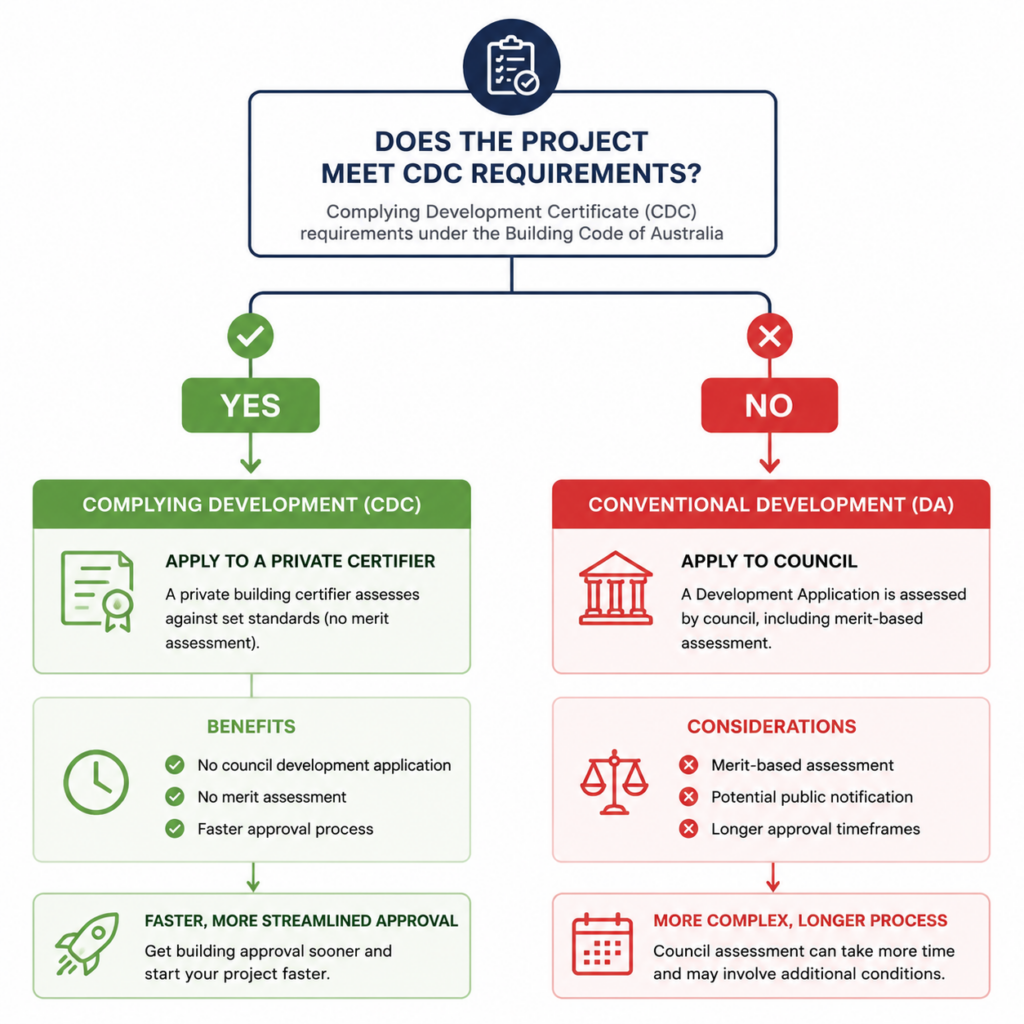
Single-storey extensions that stay within standard height limits, sit clear of required setbacks, and don’t sit on land affected by flood, bushfire, or heritage overlays typically qualify for a CDC (NSW planning framework, general guidance, 2026). Second storey additions, extensions close to a boundary, or projects on constrained sites are more likely to need a full DA.
For more on when a second storey changes the approval picture, see second storey addition wollongong → second storey guide
On Illawarra sites, the overlays catch people out more than the extension design itself. A straightforward single-storey addition can still need a DA if the block sits in a mapped flood zone near the coast, something a homeowner often doesn’t know until a certifier checks council mapping.
What Documents Do You Need for Approval?
Both pathways generally require site plans, floor plans, and elevations prepared by a designer or draftsperson, with a DA also often requiring a Statement of Environmental Effects and, in some cases, a BASIX certificate (NSW planning framework, general guidance, 2026). Structural engineering documentation is required for both pathways once the extension involves any change to the building’s load, such as a second storey.
How Long Does Each Pathway Take?
A CDC is generally faster than a DA because a private certifier can assess and issue it without going to a council meeting cycle, while a DA timeline depends on council workload and whether neighbour notification or referrals to other authorities are required (NSW planning framework, general guidance, 2026). Exact timeframes vary by council area and project complexity, so it’s worth asking a certifier or your council directly for current processing times.
Frequently Asked Questions
Can I start building before approval comes through?
No. Construction without an approved CDC or DA is not compliant, and starting early can create problems when it comes time for final inspections or selling the property later.
Who decides if my project needs a DA instead of a CDC?
A private certifier or council can assess this once they have your site details and plans. If any single CDC requirement isn’t met, the project needs to go through the DA pathway instead.
Does a granny flat use the same approval process as an extension?
Granny flats, or secondary dwellings, often qualify for CDC in many council areas, but they’re assessed under different specific rules to a standard home extension. See granny flat builders illawarra → granny flat guide for more detail.
What happens if my site has a flood or bushfire overlay?
Overlays typically mean extra requirements, additional engineering, or a shift from CDC to DA assessment, depending on the specific overlay and how the extension interacts with it. A certifier can confirm what applies to your site.
Not Sure Which Pathway Applies to Your Project?
Approval pathways depend on details specific to your site, not just your extension design.
Key takeaways:
- CDC is faster but requires meeting every rule exactly
- DA applies when a project doesn’t meet CDC requirements, or for most second storey additions
- Flood, bushfire, and heritage overlays can change which pathway applies
- Structural engineering is required for both pathways on load-bearing changes
For the build timeline after approval, see how long does a home extension take illawarra → timeline guide